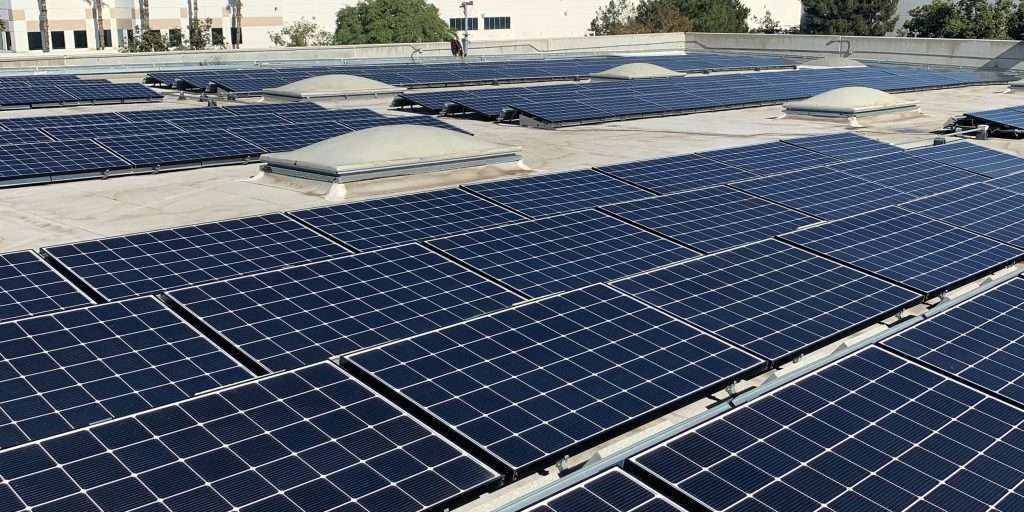
solar panels
Shorter Days, Lower Output: What to Expect From Solar Panels in Winter
By BC Solar Solutions · · Updated · 5 min read
In this article
If your solar app has been showing smaller numbers lately, you're not imagining it. Solar panels generally produce less in the winter months, because less of the sun's energy reaches them. That's normal, and much of it comes down to the sun's path across the sky.
Here's why output drops this time of year, why the cold isn't to blame, and how to tell a normal winter dip from something worth a call.
Why winter output drops
Two things change in winter: the days get shorter and the sun sits lower in the sky.
The National Weather Service explains that in winter the Northern Hemisphere is tipped away from the sun, which produces short days and a low sun angle. The U.S. Department of Energy notes that the sun's rays are far more slanted during the shorter days of winter. It adds that places in the middle latitudes, like the United States, receive more solar energy in summer, not only because days are longer but also because the sun is almost directly overhead.
That matters because, as the Department of Energy puts it, the amount of power a solar system generates depends on how much of the sun's energy reaches it. The U.S. Energy Information Administration adds that solar panels produce the most electricity when they directly face the sun. In winter there are fewer daylight hours, and the light that does arrive comes in at a lower angle. Tesla's support pages put it simply: winter months have fewer daylight hours than summer months, and you'll see your system's production change through the year with your location and sunlight hours.
The shortest day of the year
NASA explains that for the Northern Hemisphere, the winter solstice is the shortest day of the year. It falls on December 21 or 22, and the days begin to lengthen after it. The National Weather Service notes that on the solstice the sun reaches its lowest noontime position, which changes very little for several days before and after.
So late December is when daylight is at its lowest, and the days get gradually longer from there.
The cold isn't the problem
It's easy to blame the chilly mornings, but cold isn't what lowers winter output. The Department of Energy says solar cells generally work best at low temperatures, and that higher temperatures cause a slight increase in current but a much larger decrease in voltage. Ohio State University Extension makes the same point from the other side: solar electric systems depend more on the amount of sunlight they receive than on the temperature.
So the shorter days and lower sun are what hold winter production down, not the cool air.
Clouds and shade
Clouds. Panels still work on cloudy days. Panasonic's solar support pages say panels absorb various kinds of light, but that a system produces less on cloudy days than on clear, sunny ones. Maxeon, another panel maker, says the same: panels work on cloudy days but may produce less depending on how dense the clouds are.
Shade. This one surprises people. Ohio State University Extension explains that shadows from trees, chimneys and buildings change in length and direction through the day and from season to season, and that shading gets worse in winter, when the sun takes a lower path across the sky. The South Carolina Energy Office notes that shading reduces a panel's performance because it blocks sunlight, and that shading can change from summer to winter because the sun's path changes.
That means a tree, a chimney or a neighbor's roofline that never touched your panels in July can shade part of the array in December. If you can, look at your roof from the ground at a few times on a sunny winter day and see where the shadows fall.
How to tell a normal dip from a real problem
The fairest comparison for this December is last December, not last July.
If you don't have last year's numbers, PVWatts, an online calculator from the U.S. Department of Energy's National Laboratory of the Rockies (formerly NREL), can estimate a system's production month by month. Its help page explains that the estimates use weather data that is typical of long-term averages, so they're better indicators of long-term performance than of any specific month or year.
A few things are worth a closer look in any season:
- A drop compared with the same month last year, in similar weather.
- One panel reading much lower than the others, if your app shows panel-level data. Our guide to reading your solar monitoring app covers what those screens mean.
- An alert or error code. That one is for your installer.
Keep the winter sun on the glass
With fewer hours of strong sun, you want as much of it as possible to reach the cells. A 2022 NREL research poster lists birds, leaves and debris as causes of partial shading and hot spots on panels. Panasonic's support pages recommend keeping trees and bushes trimmed and washing panels as needed to keep off dust, dirt and bird droppings. Maxeon strongly recommends that homeowners not go onto the roof for panel cleaning or inspection.
We recommend cleaning every 2–3 months in Inland Empire dust. If keeping track of that is a hassle, our quarterly and biannual maintenance plans, with optional monthly inspections, put cleanings on a schedule. See our maintenance plans, or learn more about our residential solar panel cleaning.
Frequently asked questions
Do solar panels work in winter?
Yes. They still make electricity in winter when sunlight reaches them, but they produce less on short, cloudy days than on long, clear ones.
Does cold weather hurt solar panel output?
Not usually. The U.S. Department of Energy says solar cells generally work best at low temperatures. Winter output drops because of shorter days and a lower sun, not the cold.
When are the days shortest?
Around the winter solstice, on December 21 or 22. The days get longer after that.
How do I know if my winter production is normal?
Compare it with the same month in past years, in similar weather. If you don't have that history, PVWatts can give a month-by-month estimate.
Should I still clean my panels in winter?
Rain can help, but it doesn't wash everything off. Our post on whether rain cleans solar panels covers what it leaves behind. We recommend cleaning every 2–3 months in Inland Empire dust.
Make the most of the winter sun
BC Solar Solutions is family-owned (since 2018) and fully insured. Book a same-day or next-day appointment, with satisfaction guaranteed. Get a free quote or call (888) 875-6235.