solar panel cleaning
Santa Ana Winds and Your Solar Panels: What to Check After a Windstorm
By BC Solar Solutions · · Updated · 5 min read
In this article
Santa Ana season is here. These dry, gusty winds can kick up dust across the Inland Empire, and strong wind can loosen or damage parts of a solar system.
Here's what Santa Ana winds are, how they affect solar panels, what you can check from the ground once the wind dies down, and what to leave to a professional.
What are Santa Ana winds?
The National Weather Service describes Santa Ana winds as dry winds that form when air from high pressure over the desert Southwest flows west toward low pressure off the California coast. They push east to west through the mountain passes of Southern California. A National Weather Service technical memo describes them as a hot, dry desert wind, generally from the northeast or east.
The Weather Service says these winds are most common during the cooler months of the year, from September through May, and the technical memo says they most commonly occur between October and February. The Weather Service also notes that they can cause major property damage and raise wildfire risk because they're so dry.
For solar panels, there's also dust. South Coast AQMD, a regional air quality agency, has issued windblown dust advisories for the Inland Empire during Santa Ana events. Its advisories explain that gusty Santa Ana winds "can lift dust and soil into the air."
How dust and wind affect solar panels
Solar panels make electricity from the sunlight that reaches the cells, so anything sitting on the glass gets in the way. A 2022 research poster on soiling from the National Renewable Energy Laboratory (NREL) puts it plainly: natural soiling "reduces PV energy output". The same poster notes that material deposits on panel surfaces cut down the light getting through and the energy produced.
Where your home sits matters too. NREL's maintenance guide points out that module soiling can often be traced to a source, such as construction-site dust, and that birds are a source of soiling as well.
Strong wind can do more than leave dust. NREL's guide to preparing solar systems against storms says storm events can crack or break the glass on modules or detach the frames. It adds that loose wires can be blown around and damaged in high winds, and that fasteners can vibrate and loosen during high-wind events.
What to check after a windstorm, from the ground
You don't need to climb onto the roof for a first check. Working on a roof is risky, especially on tile or a steep pitch, so start from the ground or an upstairs window.
- Look at the glass. Dust, leaves or branches on the panels, or debris piled along the bottom edge, are all worth noting.
- Look for anything loose or broken. Hawaiian Electric's rooftop solar safety tips say to do a visual inspection after a storm and look for signs of damage, including loose equipment. Cracked glass, a panel or frame that looks loose, or wires hanging down are signs to call for help.
- Check your production numbers. The U.S. Department of Energy's guidance on operating solar systems at federal sites says to regularly check operational indicators, such as energy production meters and error messages on the inverter. If your app or meter shows a drop after a windy stretch, and clouds or shorter days don't explain it, it's worth finding out why.
- Look around the yard. If you see downed or low-hanging power lines, stay away from them. Hawaiian Electric's safety tips say to call the utility to report damaged poles and low-hanging or downed lines.
If you see damage, call your installer
Solar panels keep making electricity when the sun is on them, even after a storm. Hawaiian Electric warns that after a storm, a system may still be producing enough voltage to cause serious injury if you come in contact with it. NREL's storm guide says solar systems produce high voltages that can cause electrical shocks, and that only trained and qualified electricians should work on the electrical parts of a system.
If something looks damaged:
- Don't touch it. Don't try to repair, move or remove panels or equipment yourself.
- Call your solar installer or a qualified electrician. Hawaiian Electric's tips say to contact your contractor or installer to report damage to a rooftop solar system.
- Take a photo from a safe spot. It can help you show your installer what you saw.
When a cleaning makes sense
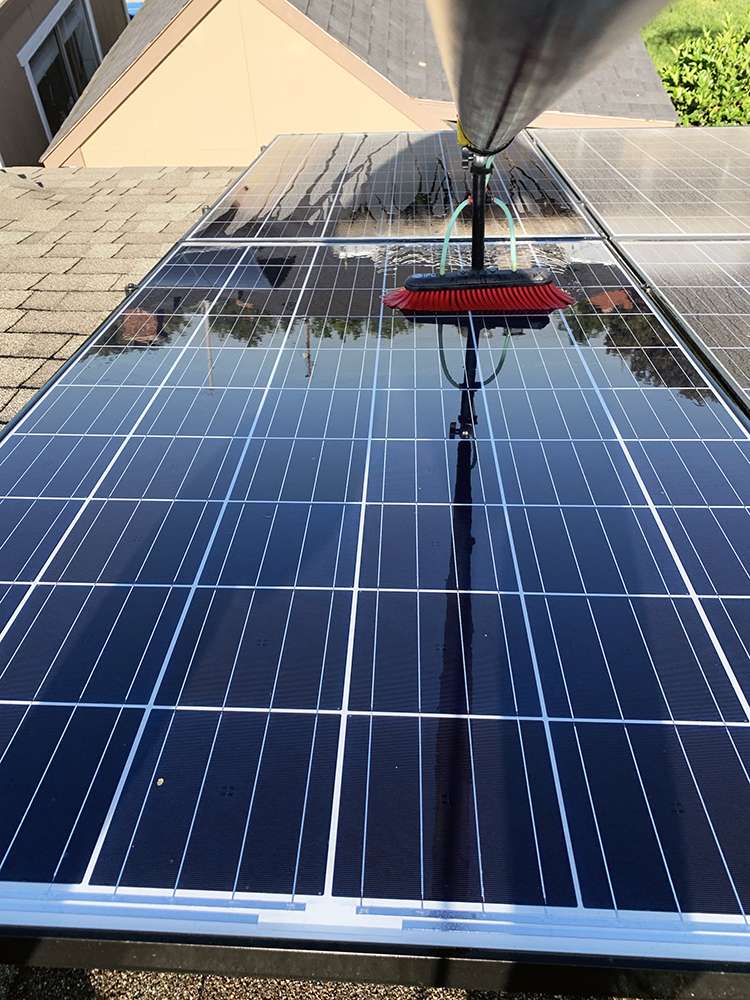
If the panels look intact but dusty after the winds, that's where we come in. We clean with deionized pure water and soft brushes, with no harsh chemicals. NREL's soiling poster also lists deionized water for washing modules, and soft brushes if contact cleaning is necessary.
Cleaning a typical home takes about two hours, and each cleaning comes with an inspection plus a report. We recommend cleaning every 2–3 months in Inland Empire dust. Learn more about our residential solar panel cleaning.
If you'd rather not keep track of when your panels are due, our quarterly and biannual maintenance plans keep you on schedule, with optional monthly inspections. See our maintenance plans.
Frequently asked questions
When are Santa Ana winds most common?
The National Weather Service says Santa Ana winds are most common during the cooler months of the year, from September through May. A National Weather Service technical memo says they most commonly occur between October and February.
Can Santa Ana winds make my solar panels dirty?
South Coast AQMD says gusty Santa Ana winds can lift dust and soil into the air, and NREL researchers note that natural soiling reduces the energy output of solar panels. We recommend cleaning every 2–3 months in Inland Empire dust.
Should I get on the roof to check my panels after a windstorm?
No. Start from the ground or an upstairs window. If you see damage, don't touch it. Contact your solar installer or a qualified electrician, because a system can still produce electricity after a storm.
How do you clean solar panels?
With deionized pure water and soft brushes, and no harsh chemicals. A typical home takes about two hours, and each cleaning comes with an inspection plus a report.
Ready for a cleaning after the winds?
BC Solar Solutions has been family-owned since 2018 and is fully insured, with same-day or next-day appointments and satisfaction guaranteed. Get a free quote or call (888) 875-6235.